
Good Neighbours Make Good Grasslands

Most ranchers understand that fence lines only stop so much movement. While it may deter livestock, the grass, wildlife and water don’t recognize these man-made boundaries. Grasslands are connected across ranches, communities and borders, and what happens on one piece of land can influence what happens on the next. That’s why good relationships between the people who live and work on grasslands matter. When we share knowledge and create connections, we can do more for the grasslands we all depend on.
Connectivity isn’t just for neighbours; it has implications for wildlife as well. The wildlife that call grasslands home evolved on a landscape that was vast and connected, unlike the reality of the landscape today. Fragmentation of grasslands has impacted wildlife in multiple ways including population numbers, ability for migration and movement and forage availability.
Increasing the ability for wildlife to move across the landscape through tools such as wildlife-friendly fencing can help reduce barriers for species that depend on large, connected grassland areas. Pronghorn can benefit greatly from fencing changes that allow them to move more easily across their seasonal ranges especially in the winter. Changes to fence lines can also reduce the risk of fence collisions for Greater Sage-Grouse, particularly in areas near leks where they may be more active. Ranchers making everyday management and operation decisions such as changes to fencing can make a meaningful difference when they are implemented across a larger landscape.
Movement of wildlife can also affect a broad landscape if certain ranches or areas are facing threats of invasive species such as common burdock. If an infestation is happening in one pasture, it isn’t long before neighboring landscapes are affected or under threat of spread from wildlife movement.
When ranchers utilize proper grazing management, it supports the production of healthy grasslands across the landscape. Having a functional grassland in one pasture helps the whole landscape by producing healthy seedbanks, reducing the ability for invasive species to take root and ensuring clean water supply. Grazing management looks different for every operation and networking with other ranchers and land managers can help cultivate ideas or approaches to grazing strategies that might be applicable for your operation.
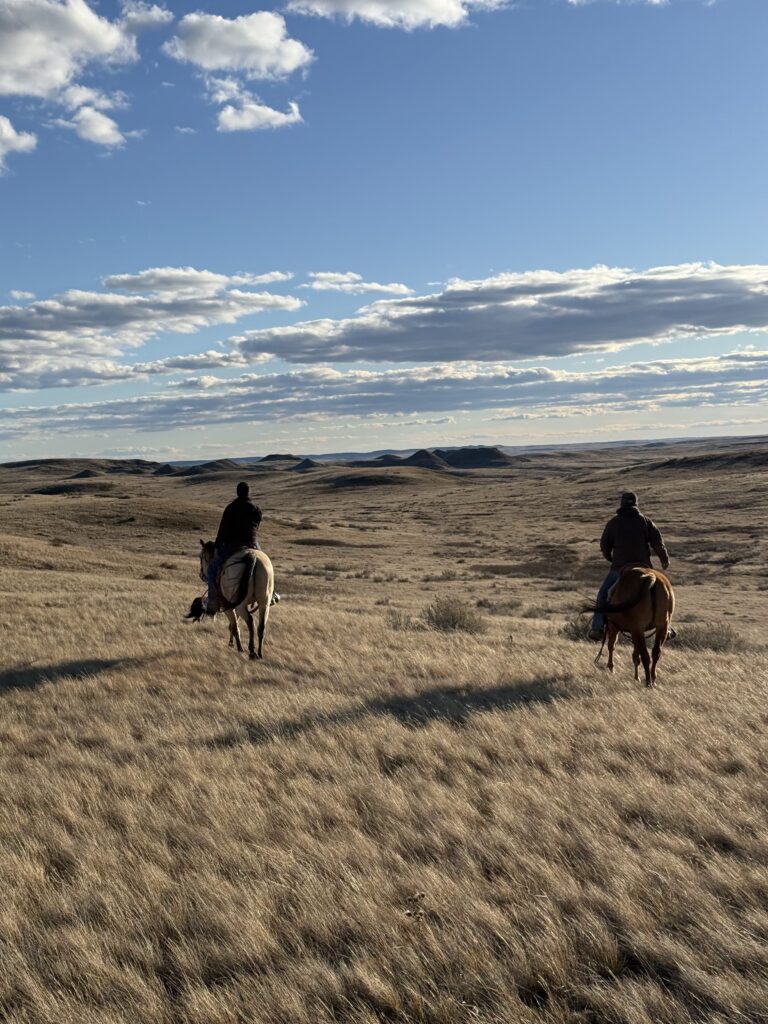 Creating spaces where ranchers and landowners can network, share experiences and build relationships can be necessary if we want these landscapes to continue to thrive. Strong relationships create opportunities to exchange ideas, learn from one another and find solutions to the challenges that come with managing grasslands. They can also help the next generation of ranchers find people they can look to as mentors, or someone who has been through a similar situation and can offer perspective. Sometimes it’s as simple as providing a sounding board when facing difficult decisions.
That connection can matter just as much beyond the practical side of ranching. Ranching can be an isolating business, and the pressures of weather, markets, finances, succession and day-to-day decision-making can feel like a lot to carry alone. Having someone you trust to bounce ideas off of, talk through a tough year with or simply share a coffee with can make a massive impact on mental health.
These relationships strengthen more than individual operations. It builds a stronger ranching community where knowledge is shared, younger landowners have more resources, and ranchers have a network of support when times get tough.
Every ranch is operated differently and creating connections and networks between ranchers doesn’t mean everyone has to manage their grasslands the same. Each area has different nuances, resources and factors that need to be considered before making management decisions. Every land manager has different comfort levels when it comes to implementing changes and by seeing what has worked for others, it creates an opportunity to ask questions and learn from other experiences.
Creating spaces or opportunities where ranchers and landowners can connect with one another, conservation organizations and researchers can have a lasting impact on grasslands. Sharing ideas, concerns, experiences and even a good joke builds relationships that might not otherwise exist.
Attending a local event, field day or workshop can introduce you to people who may become mentors, collaborators or simply someone to call when you need to talk through a challenge. Those connections benefit more than the individuals involved, they strengthen the communities and partnerships that help keep grasslands healthy and working for generations to come.
Author: Mindy Hockley-Anderson