
Fall Forage Heroes

The shorter days, the chill in the air, and green fields turning gold all signal one thing: Autumn is upon us. As the seasons shift, so does the nutritional value of forages. Ensuring livestock have access to high quality feed is an important consideration when preparing for our long Saskatchewan winters.
Not all forages are created equal when it comes to late season grazing value. Tame grasses will typically reach their peak nutritional value in early or mid summer and as time goes on, they become dry, coarse and less desirable for livestock. Factors such as drought can expedite this process, reducing the quality and potential intake from livestock. Native grasses are not only hardy and resilient to climate extremes but provide essential nutrients for livestock and wildlife during the fall and winter seasons. Knowing the characteristics of different native grasses can help to understand their role in late season grazing.
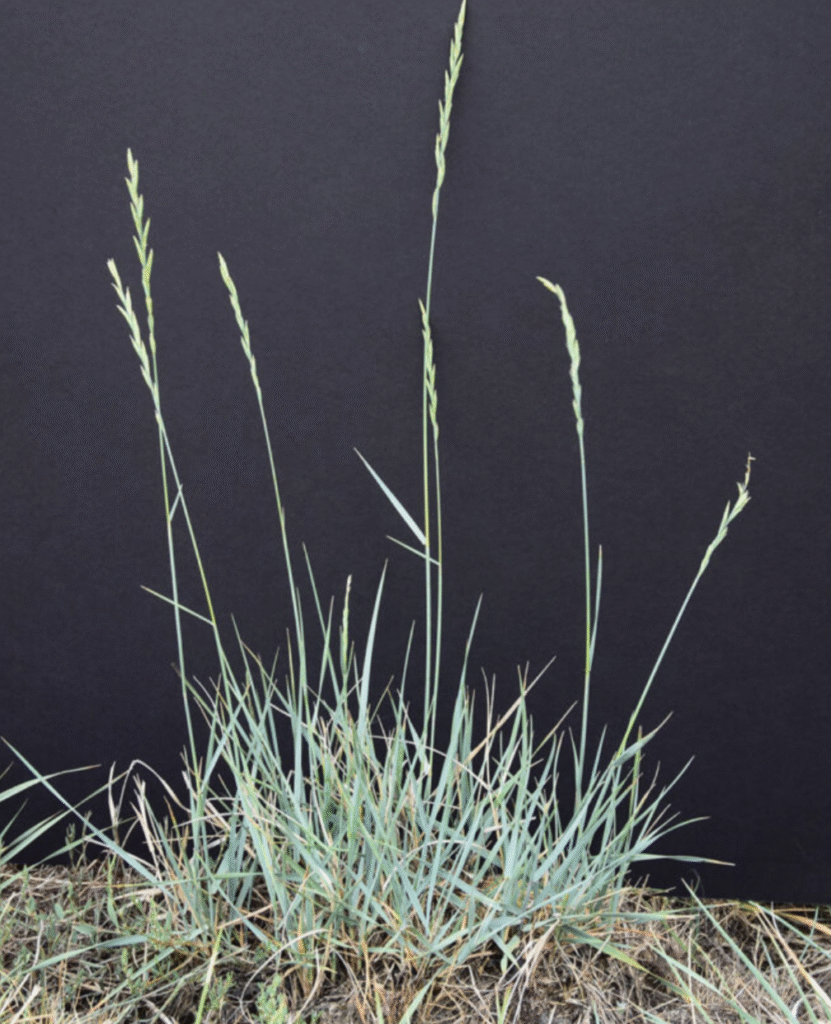 Western Wheatgrass (Pascopyrum smithii)
A cool-season and sod-forming grass, Western Wheatgrass is well known for its high palatability and moderate protein levels even late in the growing season. It can start to grow early in the spring and yet remain relatively green into the fall, especially with adequate moisture. It has a crude protein content of around 10–12% in the early season, tapering to 7–8% in fall, which is still sufficient for maintaining livestock condition in late grazing periods.
Western Porcupine Grass (Hesperostipa curtiseta)
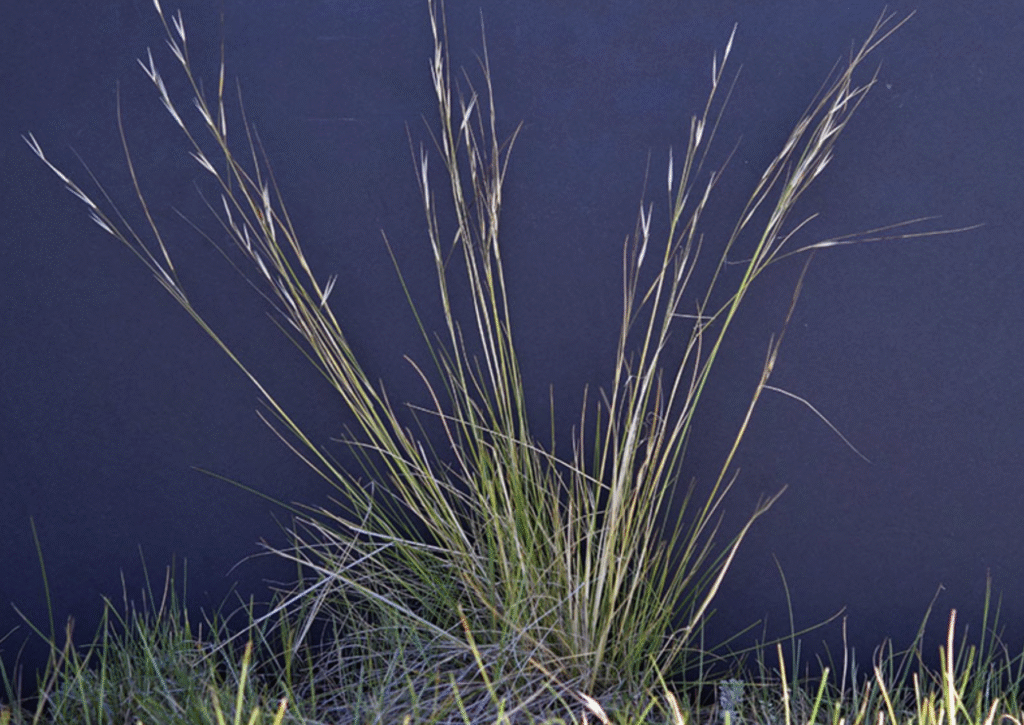 This cool season bunch grass offers moderate nutritional value for livestock and can be highly palatable, with an average digestibility of 45% and crude protein of 6-10% in late summer. Its tough stems and dense seed heads make it less palatable in summer, but as other forages dry out or become snow-covered, the natural weathering will soften Western Porcupine stems and make them more palatable for livestock. Although it is not a high-energy feed, its ability to retain structure and accessibility above snow cover helps it provide consistent roughage and valuable fiber during fall and winter grazing.
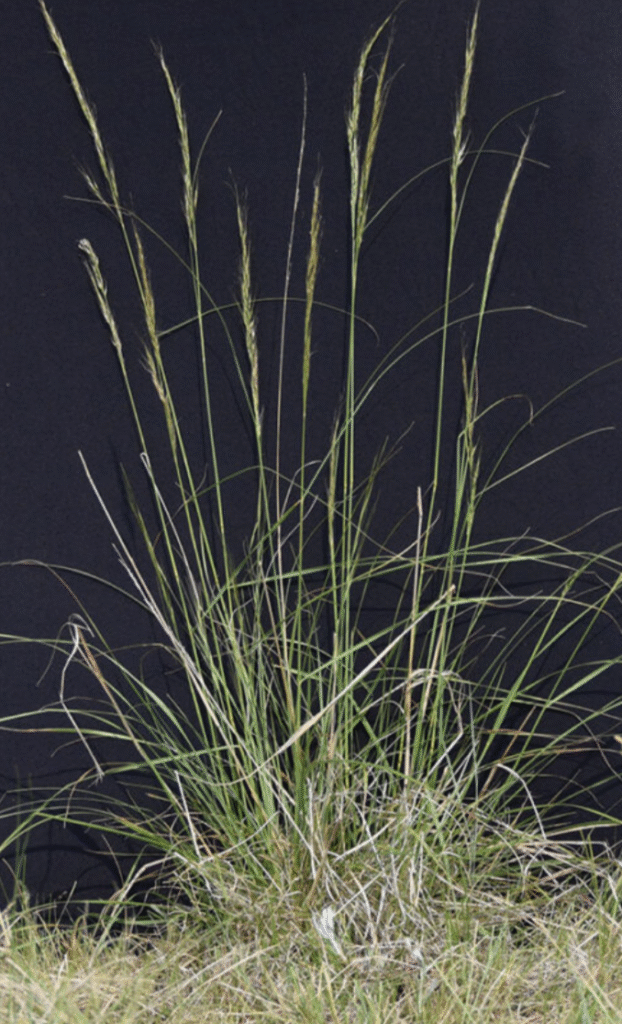 Green Needlegrass (Nassella viridula)
Green Needlegrass is a cool season, decreaser species and is highly valued for its excellent forage quality, especially late into the grazing season. Green needlegrass has soft awns that are not problematic to grazing livestock and it has an average digestibility ranging from 52% in May to 45% in September. Its crude protein levels range from 20% in the spring to 7% in the fall. The ability for it to maintain high protein and energy levels relative to other native and tame species, makes it highly desirable for late season grazing. Even when mature, it remains more digestible than other grasses.
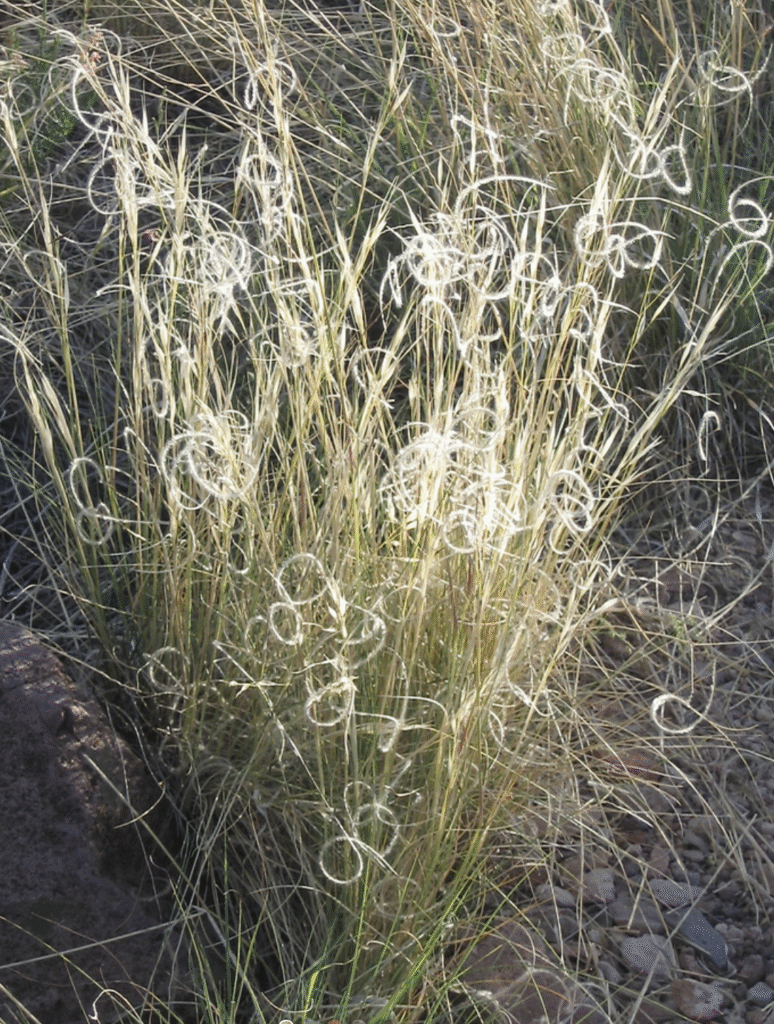 Needle-and-Thread Grass (Hesperostipa comata)
This cool-season bunchgrass is found across much of Saskatchewan’s prairie and mixed-grass regions. It starts growing early in the spring and matures by mid-summer, but it can retain a surprising amount of forage value into the fall. While its needle-like seeds can reduce palatability for a short window during peak seed production, the leaf material remains digestible, and livestock will readily graze it once seed heads drop. They boast an average digestibility of 40-50% and crude protein level of 6-10% during the summer grazing season but cures well for late season use. Its protein levels typically range from 6–10%, making it a valuable component in fall pastures, especially when combined with other natives.
Blue Grama Grass (Bouteloua gracilis)
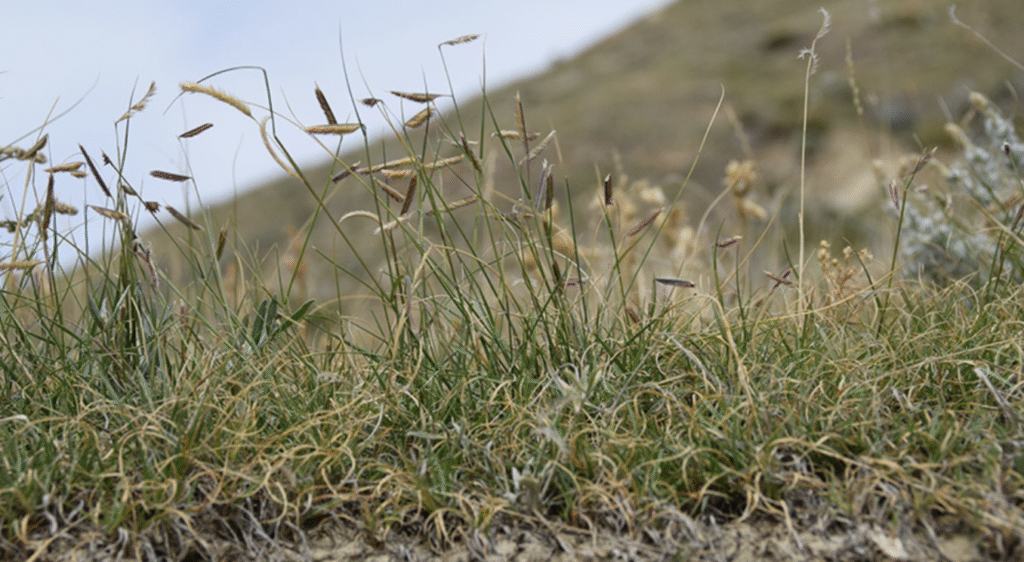 Blue grama is a warm-season, native bunchgrass that thrives in the dry, open grasslands of southern Saskatchewan. Although it’s a low-growing species, it punches above its weight when it comes to late-season forage value. Blue grama is highly palatable to livestock and retains its digestibility and protein content longer than many tame grasses, often holding around 7–9% crude protein into the fall, depending on conditions. It doesn’t produce as much biomass as taller species, but it makes up for it with dense nutritional value and excellent regrowth potential.
Taking the time to get to know your pastures better and identifying the different grasses can help to make management decisions that will potentially influence which season you graze each of your pastures and can help your livestock get the most out of the grass available. So get outside and discover who your fall forage hero is!
Author: Mindy Hockley-Anderson