
Herders Across Borders: Attending the Global Gathering of Pastoralist Women

Herders Across Borders: Attending the Global Gathering of Pastoralist Women
Last May, I had the privilege of attending the Global Gathering of Pastoralist Women, a 4-day conference that brought women from nearly 90 countries to gather in Kathmandu, Nepal. This gathering was the first of its kind since 2010. The goal of the Kathmandu gathering was to build upon the foundation created at the 2010 gathering and further support pastoralist women in advocacy and coalition-building. Through this amazing opportunity, I was able to be a part of a global movement to recognize and uplift women pastoralists. I also got to experience the dizzying variety of herding cultures from six continents and hear stories of their homelands and their animals, including yaks, water buffalo, reindeer, and camels. It was such a unique privilege to learn from and collaborate with these vibrant, capable, and passionate women.
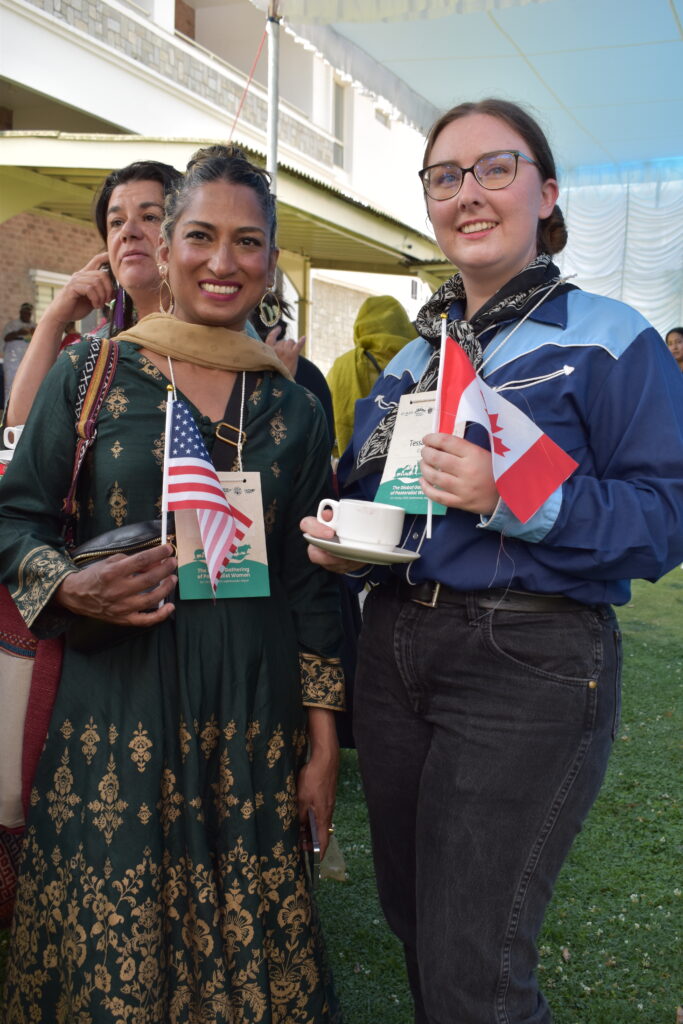 The people I met at this conference were incredibly diverse- herders came from everywhere from the Arctic Circle to the land Down Under. There were also researchers, interpreters, and community activists working in pastoralist communities. With such a diverse range of backgrounds, the one thing we all shared was our involvement in pastoralism, AKA extensive livestock production. Pastoralists occupy marginal landscapes where crop cultivation isn’t viable, and animals must traverse large areas to forage. The term is most often applied to traditional nomadic herding societies such as the Masai of east Africa or the Evenki of Siberia, and there were women from both of those groups in attendance. It can also refer to people from settled cultures where animals are moved between pastures according to what the range can provide. This type of pastoralism includes European sheep farmers, Australian cattle stations, and of course, ranchers from the Americas.
Pastoralists number up to 500 million people globally. In addition to stewarding around one billion animals, they also share responsibility for biodiverse ecosystems and resources like soil and fresh water. Pastoralists and their livestock are locally adapted, and their traditions represent a generational body of knowledge on resilience, conservation, and co-existence.
Pastoralism, including ranching, is a way of life, where we live and work alongside family and community members. Whether they are severe or subtle, there are gendered expectations woven throughout these lifestyles. Some nomadic herding cultures centre women as leaders or providers, such as the Touareg of the Sahara, who are traditionally matrilineal and pass on their livestock through the female family line. Unfortunately, in many regions of the world, the local government forbids women from owning land and businesses. Women fare better in developed countries where we have legal rights of ownership, but our customs surrounding childcare and administration can place women at a distance from ranch management decisions.
Women in rural ranching communities can also struggle with isolation and reduced access to support systems. These inequalities can be compounded when governments and non-profits focus on men in their engagements with pastoralist communities, and when important discussions on land and water use, trade, and rural development take place without women present. The purpose of the Kathmandu gathering was to create a call to action to recognize the important roles women play in pastoralist societies, and to support pastoralist women to advocate for themselves and their communities.
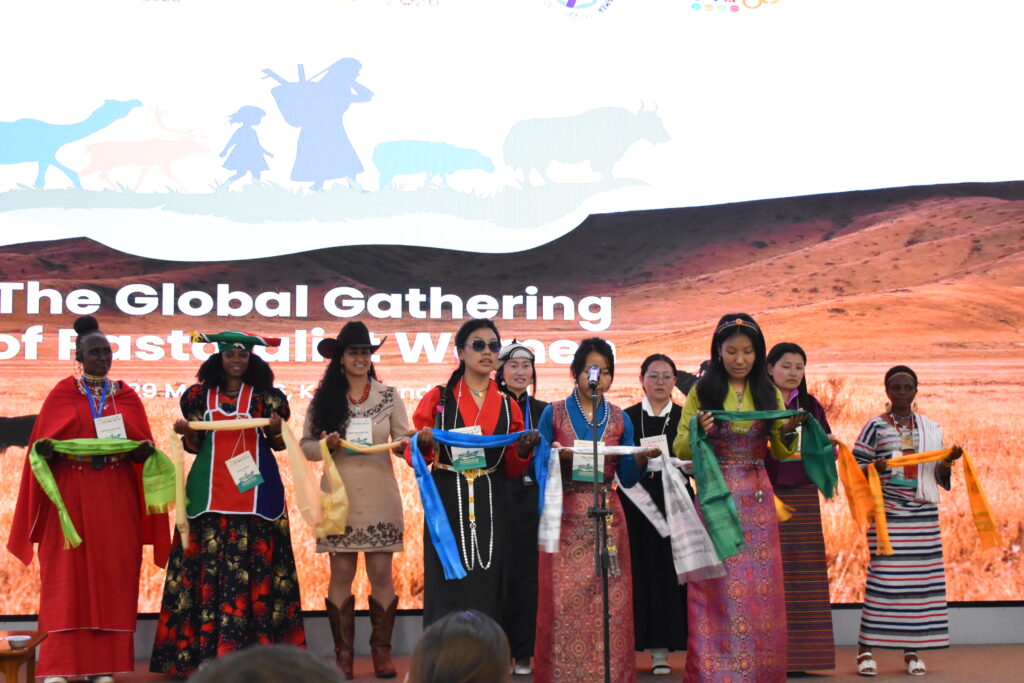 The gathering spanned four days, with the first two days dedicated to getting to know each delegate, her context and culture, and the issues being faced. It was during these days that some of the most exciting and inspiring events of the conference took place. There were also many somber moments, with stories shared of armed conflict and displacement. It was sobering to be reminded of the safety and privilege we enjoy here in Canada. At the same time, there were less pressing challenges that rang familiar the world over, such as succession planning, market access, and climate adaptation. This led to a strong sense of camaraderie that powered us through the heavy discussions.
The latter two days were devoted to three goals- drafting a declaration on the importance of pastoralist women, developing a strategic plan to promote the declaration, and creating a global women pastoralists’ network. With so many differing viewpoints and regional complexities to consider, this was a daunting task. The language barrier and time constraints added a further level of difficulty to navigate. I left the conference with a new appreciation for the skilled moderators and facilitators, who worked diligently to document the proceedings, keep the sessions on track, and make everyone feel heard.
When your job is not just caring for animals, but also children, elderly relatives, and a business, it’s hard to set aside your responsibilities and get away for a week. The delegates of this conference went to huge lengths to fund their journeys, leave their homelands, and travel to Nepal to be together with fellow pastoralists. I hope that in the future, more women will have this chance, and there will be more successes to celebrate and more moments of camaraderie between women across languages and borders.
My favourite memories from the conference will be those where we set aside the intense political discussions to learn about each other. These were the conversations between the sessions, where we would sample dried yak cheese, share pictures of our herds, and make plans to visit each others’ homes. It’s my hope that as these gatherings continue in years to come, the struggles will shrink and the fight for recognition will fade into the past, and there will be more time for the fun stuff, like comparing guardian dog breeds and cheesemaking techniques. With the publication of the Kathmandu Declaration, that future moves a little closer.
I’d like to recognize the organizers of this event, the host organization ICIMOD, and CFGA for supporting my travel. The full Kathmandu Declaration is available here: https://iyrp.info/sites/default/files/2026-08/Kathmandu-Declaration-Accepted-8-Aug-2026.pdf
Author: Tess Ryder