
Northern Sagebrush Steppe Workshop Connects Ranchers Across Borders

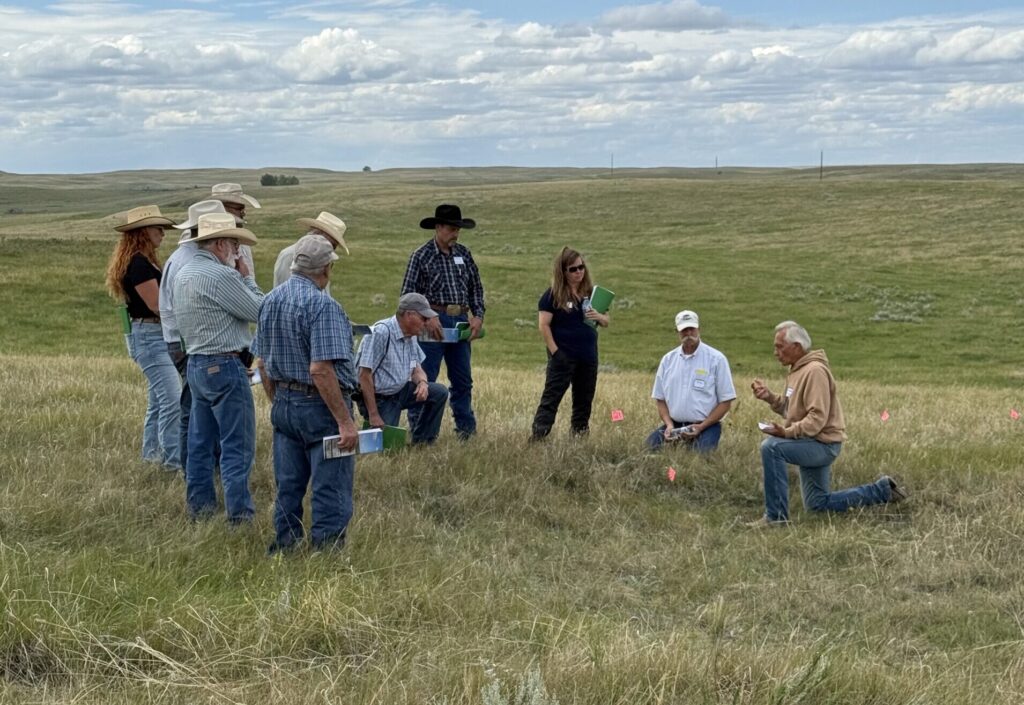 The Northern Sagebrush Steppe Virtual Landowner Workshop recently brought together ranchers from Montana, Alberta, and Saskatchewan for a good old-fashioned exchange of ideas. This time done over screens instead of the typical tailgate. The focus of the virtual workshop was simple: share what’s working for landowners, talk through what’s not, and build connections that stretch across the border but stay rooted in the values of stewarding similar landscapes.
Because when it comes down to it, ranching has always been about relationships. It’s the conversations over coffee at the kitchen table, the quick chats out the truck window, or those end-of-day debriefs when the wind finally dies down. That’s where the best ideas come from and this workshop leaned right into that.
Across the Northern Sagebrush Steppe, ranchers are working in a tough but important landscape. It’s a semi-arid system where sagebrush and native grasses support wildlife like pronghorn, greater sage-grouse, mule deer, and a whole suite of grassland birds. With this habitat coming under increasing pressure, it’s clear that looking after this landscape takes coordination and intentional management.
The morning kicked off with practical, boots-on-the-ground ideas! Clinton Uhl (AB) walked through solar water system options both permanent setups and portable units. Highlighting ways to increase livestock access to fresh, clean water while protecting wetlands and sensitive habitat. Craig Dummontel (SK) shared lessons from the Claydon pasture, where a gravity-fed water system was developed to meet the requirements of the Emergency Protection Order for sage grouse habitat, without compromising the overall functionality of the pasture operation.
Different fencing options brought plenty of discussion to the forefront with Jayann Demarias (MT) sharing experiences using electric fencing to adapt a cattle operation for sheep and goat grazing, while Leo Barthelmess (MT) shared his trials of being one of the early adopter of virtual fencing in cold climates. Since 2019, he’s been working on how this emerging technology fits into a real-world grazing system. Closer to home, Jodie Horvath (SK) with Ducks Unlimited Canada shared a virtual fencing project using Gallagher E-Shepherd to see how virtual fencing can potentially scale for application on ranches in Saskatchewan.
Restoration was another key piece to the conversation. Justin Carrier (SK) spoke openly about his experiences working to convert roughly 70 acres of cultivated land back to perennial cover using native grass species. He didn’t sugarcoat it, there are challenges, but his experience showed what’s possible with some patience and a long-term view of connecting more habitat while expanding resilient grazing resources.
From there, the conversation turned to conservation easements, both perpetual and term, and how they can fit into a working ranch. Rather than being a one-size-fits-all solution, they were looked at as another tool in the toolbox ranchers could utilize. Backed by shared research and the real-world experience around them, the discussion dug into what actually works for landowners, and how these easements can support both long-term ranch viability and landscape health.
Christy Goldhawk (AB) showcased the Waldron Grazing Cooperative, where ranchers manage nearly 89,000 acres of native grasslands. Haylie Shipp (MT) highlighted the exciting United Range program, helping today’s producers make room for tomorrow’s ranchers. Doug Gillepsie (SK) spoke about how Dixon Grazing Incorporated partnered with the Grasslands National Park on its Grass Banking program. Showcasing how former community pastures can thrive under private management while supporting conservation and collaboration.
The wrap up discussion shifted the conversation to funding opportunities and making sure ranchers know where to turn for support, whether that’s technical advice, cost-share programs, or just connecting with others trying similar approaches.
At the end of the day, the biggest takeaway wasn’t any single tool or idea but it was the value of staying connected. Regardless of living a province away or across an international border, landowners can share valuable insight that benefits the entire Northern Sagebrush Steppe. The challenges and the opportunities this landscape brings look pretty similar on both sides. And when ranchers share what they’ve learned, it doesn’t just benefit one operation, it will strengthen the whole landscape.
Big thanks to the organizations who came together and made this workshop happen! Andrew Jakes from the University of Wyoming, Paul Jones and Brad Downey with the Alberta Conservation Association, Martin Townsend with the Ranchers Stewardship Alliance, and Mindy Hockley-Anderson and Tom Harrison with the Saskatchewan Stock Growers Foundation. Here’s looking to connect more ranchers together in the future!
Organization Links:
Alberta Conservation Association