
Riparian Areas: The Key to Water, Wildlife, and Grazing

Ranching is a constant balance of juggling resources. Every day ranchers have to take into account stored feed supplies, grazing stockpiles and, of course, water- both access and quality. You can have all the grass in the world but without water, you are incredibly limited in your abilities to utilize grazing resources. Creeks, rivers, and streams bring native grasslands to life, with riparian areas forming green corridors along these waterways and wetlands.
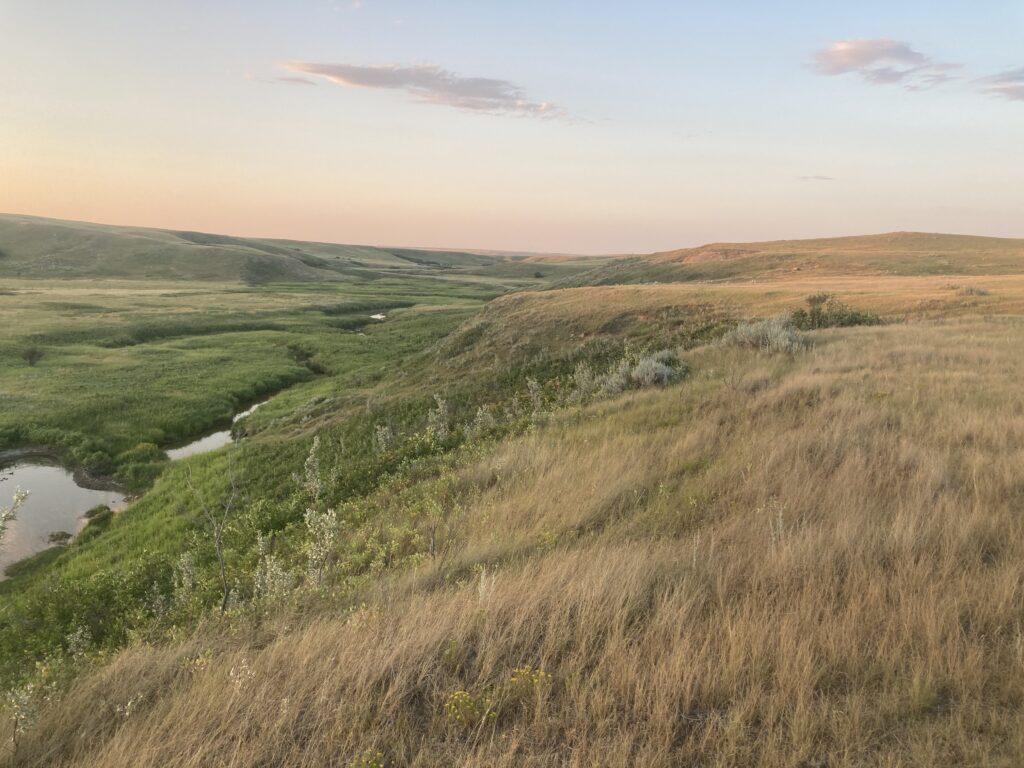 Riparian areas are noticeably more lush than the surrounding uplands and host incredible biodiversity with a mixture of grasses, sedges, forbs and shrubs that all thrive with the increased soil moisture content. Riparian areas are wildlife hotspots, providing habitat for a variety of species! The dense vegetation along streams and waterways offers nesting and foraging sites for birds, shelter and breeding grounds for amphibians, and cover for mammals ranging from small rodents to larger grazers. Insects thrive in these moist environments, supporting vegetation in the surrounding landscapes. These areas also serve as important migration corridors, making them essential for maintaining biodiversity across the landscape.
Due to the moisture-rich soil, these areas provide increased amounts of high-quality forage. The grasses, sedges, and other plants that grow along streams and ponds can often be more palatable than upland pasture vegetation, especially during late summer when other forage may become dry or sparse.
Healthy vegetation in riparian areas also works to stabilize the soil and reduce erosion around waterways. The deep roots of native sedges, grasses, and shrubs hold the riparian areas together, stabilizing banks in times of high flow. Responsibly managing riparian areas contribute to productive pastures, improved livestock health, and support the long-term sustainability of ranchers’ grazing resources.
Protecting riparian areas begins with intentional land stewardship that balances livestock use with the overall ecosystem health. Maintaining buffer zones of native vegetation along streams, ponds, and wetlands helps prevent erosion, filter runoff, and reduce grazing pressure directly on sensitive banks. These riparian areas can also act as sponges during high flow events and greatly reduce the potential impact of flooding to adjacent uplands.
Riparian areas can be particularly vulnerable to invasive weed establishment which can quickly outcompete the native vegetation and disrupt the delicate balance of these ecosystems. Invasive species such as leafy spurge, knapweed, and Canada thistle often establish along waterways where soil is moist and disturbed by livestock and or wildlife, reducing wildlife habitat and the quality of forage available for livestock.
Once invasive plants take hold in an environment, they can increase erosion, decrease water quality, and make grazing management more difficult. Protecting riparian areas through careful monitoring, maintaining healthy native vegetation, and controlling invasive species early is essential to preserve both the ecological and ranching benefits these vital prairie corridors provide.
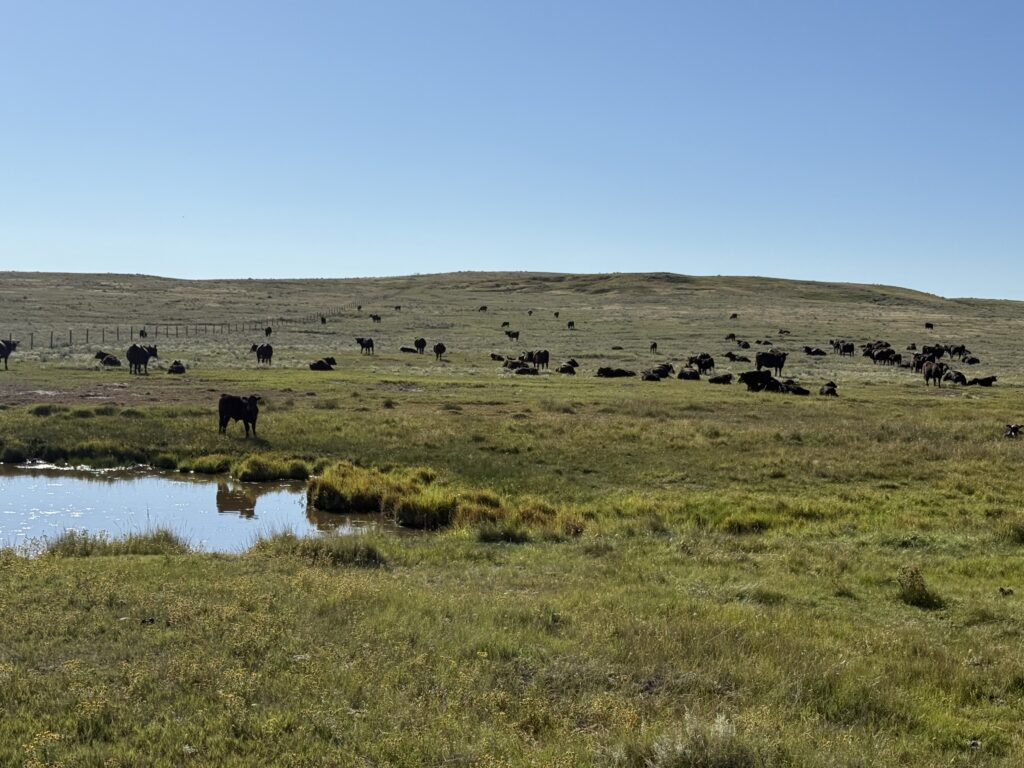 Management of riparian areas on rangelands can look very different depending on the operation. Ideally, there is minimal disruption to the habitat surrounding water sources. Using off-site watering systems can also help keep livestock away from vulnerable banks while still providing clean, reliable water. Even around manmade water sources like dugouts and dams, it can make a big impact on the overall ecosystem if they can be protected from livestock disturbance. This can be done with simple solutions such as fencing off the water and using an off-site water system to deliver water to livestock.
When utilizing off-site watering systems there are few considerations to keep in mind regarding the timing and access. Riparian areas can be especially vulnerable during the spring when the soil is already saturated. Grazing and animal impact when the soil is saturated from spring runoff can lead to increased bare ground after grazing, or increased hummocking. If possible, leaving these areas undisturbed until later season grazing will help maintain the integrity of the sensitive riparian areas.
Some landowners have success by completely fencing off riparian areas and leaving it as a separate pasture for later season grazing and this way, there is much more control over how long livestock can access the riparian area since it is managed as its own pasture. Another option is fencing off most of the riparian area and creating a gravelled access point. This protects the banks while still allowing cattle direct access to the water source. This option can be most appropriate for dugouts and do require some ongoing maintenance.
Regular monitoring of these areas to look at vegetation, soil stability, and water quality allows landowners to detect issues early and take action before problems snowball out of control. By actively managing riparian zones, ranchers not only protect wildlife and water resources but also ensure long-term productivity and resilience for their grazing lands.
Riparian areas may seem small in the grand scheme of native grasslands but their impact is massive. Protecting these zones benefits wildlife, improves forage and water quality, and ensures the long-term sustainability of Saskatchewan’s grasslands. For ranchers, managing riparian areas wisely is an investment in both the landscape and their operations.
The Saskatchewan Stock Growers Foundation helps ranchers maintain and restore riparian areas through their Habitat Management Agreements. These collaborative efforts not only protect wildlife and water quality but also enhance ranch productivity and sustainability. By working together, landowners and SSGF ensure that riparian areas continue to serve as nature’s lifelines on the prairie.
Author: Mindy Hockley-Anderson