
Waiting for Rain

You can feel it building before it comes and smell it on the breeze before you feel it hit your skin. After weeks of waiting, hoping and checking the radar you watch the clouds roll in from the distance, wind picking up as they creep closer. Then the wind calms, it goes quiet for a moment, ranch trucks stop with windows rolled down and when the rain finally comes, both the prairie and rancher let out a long exhale.
The rhythmic sound of rain hitting truck windows and the ground fills the air, washing a sense of calm over the prairie with the odd cow calling for her calf in the distance and the meadowlarks singing through the rain. Fresh sage mixed with the damp soil and wet grass fills the air. The rain washes the dust off the backs of cattle grazing on the prairie and softens the ground under your boots while moisture wicks onto the bottom of your jeans.
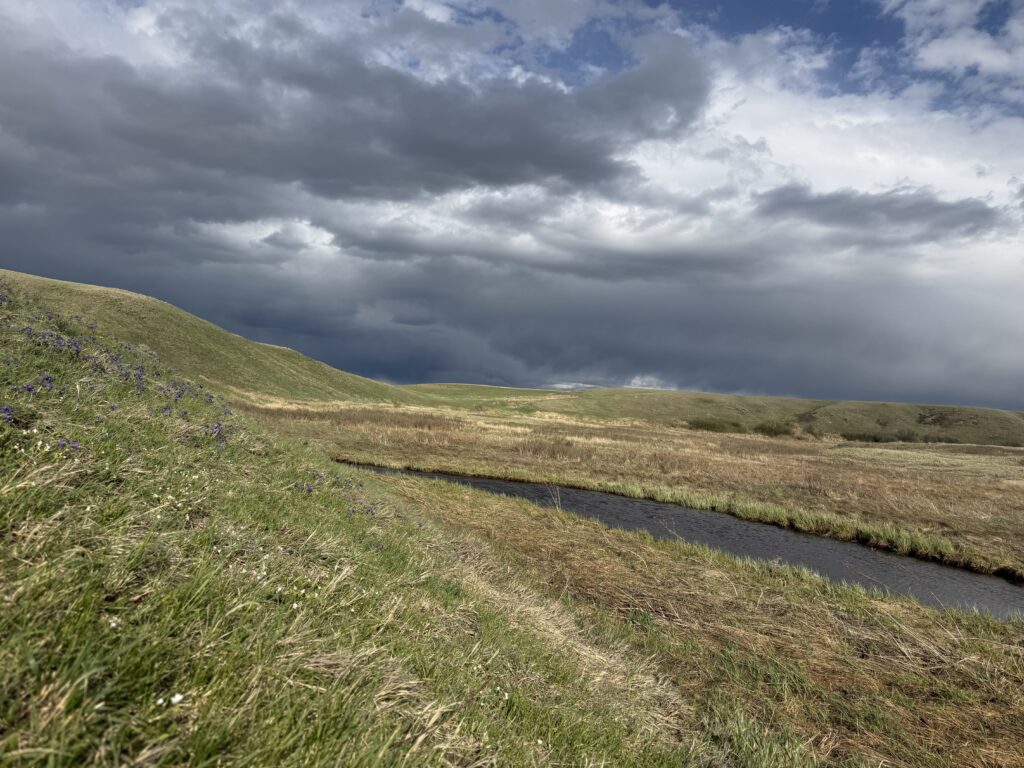 On the prairies, rain doesn’t just transform the landscape, it transforms the mood of ranchers relying on the grasslands. Native grasslands are built for weather extremes but they need to be in healthy condition to continue to be resilient and productive. When the land is well cared for, it is able to better hold onto and utilize scarce moisture through the hot summer months. The vegetation and litter shelter the soil from evaporation, wind and erosion, while deep-rooted native plants help water soak into the ground instead of running off.
Native grasslands evolved alongside cycles of drought, heavy rain and other harsh prairie weather conditions, making them uniquely adapted to Saskatchewan’s changing climate. From +35 to -35, they still persevere. Healthy grasslands act like a sponge, slowing water movement across the landscape, replenishing soil moisture and refreshing the adjacent wetlands.
Native grasslands are one of the most ecologically rich landscapes. The variety and diversity of native vegetation supports the grasslands resiliency in harsh climatic conditions. Their extensive root systems are built to find moisture well below the soil surface even during times of drought. These roots are vital to storing carbon, cycling nutrients and helping the prairie recover after periods of stress. Beyond supporting livestock production, native grasslands also provide critical habitat for wildlife that depend on the vast, open landscapes, including grassland birds, pollinators and many species at risk.
Moisture affects every ranch differently, but the relief is often shared across entire communities. Conversations in coffee shops, sale barns, and across fence lines tend to sound a little lighter and more upbeat. On the prairie, weather connects everyone.
After a good rain, the prairie seems to come alive almost immediately. The grass greens up, wetlands replenish, birds return to the fence lines, and there’s a renewed sense of optimism for the season ahead. The prairie feels healthier and alive with movement again. Rain on the prairie is more than just moisture totals, it’s hope, resilience and renewal falling onto the landscapes that ranchers and wildlife depend on every day.
Author: Mindy Hockley-Anderson