
Conservation on Your Terms: Finding the Right Fit with SSGF

Conservation on Your Terms: Finding the Right Fit with SSGF
In a world where everyone seems to be focused on the latest trend or buzzword, grassland conservation can sometimes feel like just another passing conversation that will be forgotten in a month’s time. But for Saskatchewan ranchers, whether they realize it or not, grassland conservation isn’t a new idea.
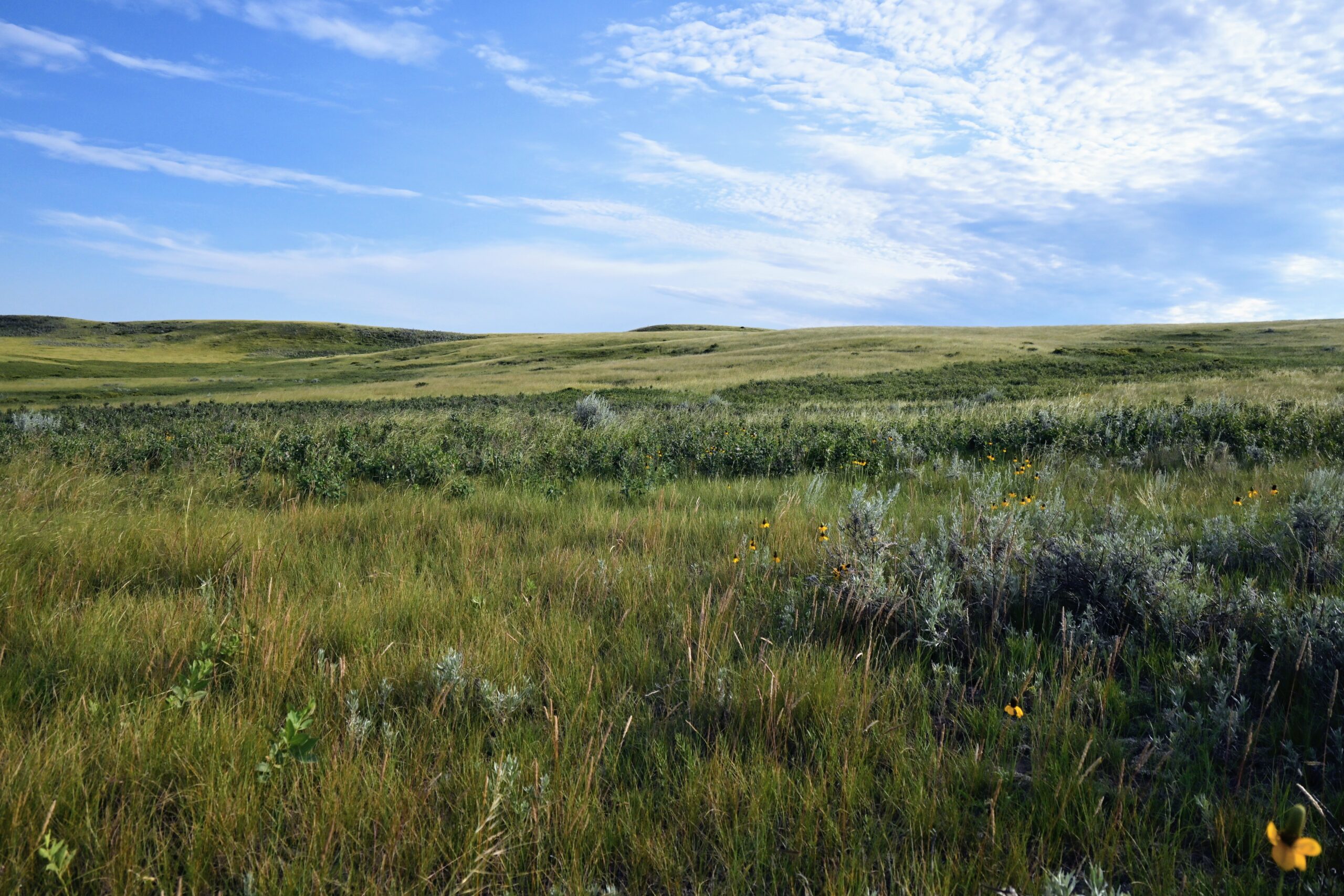
Rancher’s steward some of the last remaining grasslands, cultivating healthy and diverse ecosystems every day. Considering less than 20% of the province’s native grasslands are left on the landscape, ranchers are on the forefront of grassland conservation.
The Saskatchewan Stock Growers Foundation (SSGF) has been working with Saskatchewan ranchers and landowners for the last 6 years to expand grassland programming. The idea of conservation programming can intimidate some ranchers and might even push them away from utilizing these kinds of programs. This is why the SSGF has developed programs that are practical and non-prescriptive while increasing the resiliency of grasslands. But what do these programs actually look like on the landscape?
SSGF programming has two different pathways for programming that landowners can explore, conservation agreements or conservation easements. Both of these paths are designed to support landowners in managing and maintaining grasslands while keeping land in production.
Conservation agreements are contracts between landowners and not tied to the land title. They can be tailored to your ranch’s needs, bringing different management practices together to create a plan that works for your operation.
Habitat Management Agreements are one of our most popular programs where we can provide financial and technical assistance for projects that work to maintain and improve the health of native grasslands. There are a variety of ways these agreements can look from wildlife friendly fencing, tame grass rejuvenation to cross fencing and invasive species control. They are adaptable to your individual ranch needs. Funding for these projects maxes out at $35,000 and producers must contribute an in-kind amount that will vary depending on the type of project.
Habitat Restoration Agreements are when landowners seed cultivated land back to perennial cover using a native species blend. We have been using a Reverse Auction for Grassland Restoration to enroll landowners in this program and have seen significant demand. Lands of interest for these projects are close to existing native grasslands in order to increase the continuity of grasslands for wildlife, species at risk and reduce the risk of non-native species invading the site.
SSGF is also partnered with Birds Canada to deliver the Birds Friendliness Index Incentive Program (BFI). Participants in the program are eligible to receive per-acre annual payments in recognition of positive outcomes for bird conservation on farms and ranches compared to their surrounding area. The BFI is designed as a biodiversity incentive program to compensate producers for the contributions they are making to bird conservation by maintaining diverse grassland habitat.
The second program pathway, conservation easements, are another option for landowners to explore for conservation programming. Easements are voluntary, legally binding agreements that are put into place to protect the biodiversity and ecological function of their land by restricting development and cultivation. SSGF is eligible to hold both term conservation and perpetual easements. They are both tied to the land title, so if there is any change in ownership, the new landowners must abide by the easement restrictions. Perpetual easements are registered on the land title forever and not just for a set term length.
Term conservation easements (Term CE) offer increased flexibility compared to perpetual easements. The term lengths options are a minimum length of 25 years but can extend up to 30, 35, 40 and 45 years. Once the term length expires, the current landowner has the option to re-negotiate another Term CE or continue managing the land without one and drop all the restrictions associated with the easement.
SSGF easements come with 3 restrictions, no break, no drain and no development. These restrictions are put into place to make sure the ecological integrity of the grasslands are maintained long term. Haying and grazing are allowed under these easements and the landowners still manage and control land access.
Financial compensation for a Term CE is a payout based on a fair market value system completed by a 3rd party appraisal. The longer the term length, the more financial incentive SSGF can offer the landowner but individual valuation can vary greatly between each easement assessment. Term CE’s are paid out in a lump sum but perpetual easements are able to qualify for split receipting and the Ecological Gifts Program with the Government of Canada.
Through conservation easements, landowners can protect their native grasslands from cultivation, drainage and development while continuing to ranch and manage their own land. Whether choosing a term or perpetual easement, landowners can find an option that aligns with their goals, provides financial compensation and helps ensure these working landscapes remain intact for future generations.
At the end of the day, grassland conservation looks different for every operation, and there’s no one-size-fits-all approach. SSGF’s programs are designed to work alongside Saskatchewan’s ranchers and landowners, offering flexible options that support both healthy grasslands and viable ranching operations. Whether through conservation agreements or easements, the goal is the same, to recognize the important role producers play in caring for the land and help ensure Saskatchewan’s native grasslands continue to support ranching, wildlife and rural communities for generations to come.